Articles
Reflections on design, ritual, and the art of intentional living.
Reflections on design, ritual, and the art of intentional living.
Published May 14, 2026
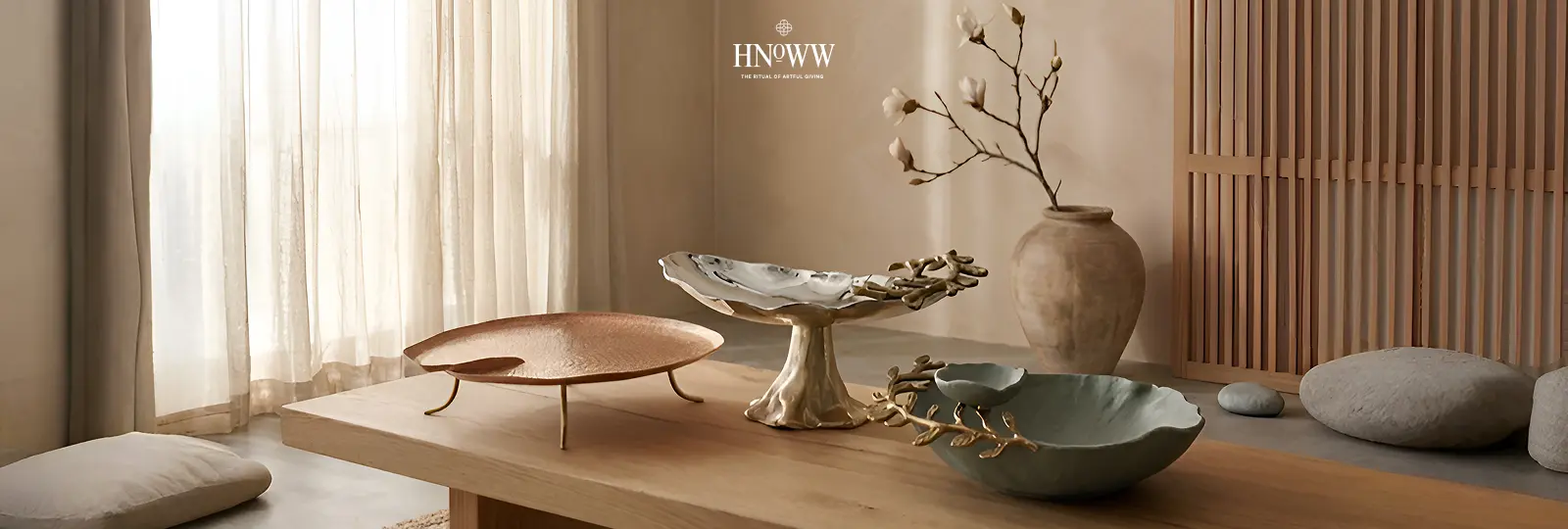
There is a special kind of silence that changes the essence of a room.
It is not about emptiness or decorating less just for the sake of it. A special sort of confidence, when one feels like each item in the space belongs there.
In contemporary Dubai homes, whether vast penthouse apartments offering breathtaking skyline views or architecturally elegant villas drenched in natural daylight, the trend of interior design today involves doing less decoration. It means surfaces are not supposed to look like nothing until they are cluttered. Today, a single object can shape the entire feeling of a room.
In other words, centerpieces have evolved to become a thing of their own.
Dining tables used to be filled with a lot of other items for decoration purposes. Coffee tables had lots of other stuff on them as well. Today, contemporary interiors have come to favor a more thoughtful approach to choosing centerpieces. Beyond aesthetics, these pieces soften structured interiors and make the space feel more natural and welcoming.
Sculptural objects in metal, stone, and organic forms are becoming an important part of contemporary home decor in Dubai.
Dubai is famous for its grand buildings and contemporary lifestyle, so the interior design is becoming increasingly sophisticated and elegant.
This trend certainly makes a sculptural focal point more important.
Open-plan homes need pieces that can hold presence within a larger space. A huge dining table, a big coffee table, or even a spacious living space may seem incomplete with ordinary decorative elements. Tiny decorative objects blend into the vastness of the architecture, and too many decorative elements make the composition visually cluttered.
A sculptural centerpiece adds character without making the space feel crowded.
It gives form to the space without compromising its open design.
This is particularly true in Dubai interiors, where modern interiors are characterized by simple lines, neutral colors, natural stones, brushed metals, and textures. In such settings, sculpture pieces for decoration play the role of an extension of the interior rather than mere décor pieces.
Moreover, luxury hospitality influences residential design in the UAE. The interior decor of contemporary luxurious hotels, residences designed by designers, and galleries employs sculptures to decorate their interiors, thus encouraging people to treat interior decoration just as well as the decoration of hotel rooms.
This has naturally led to a more refined approach to styling.
This implies that instead of adorning every corner with decorative objects, people opt for fewer items that have their own distinct identity. This will help create an impressive impact through the use of shape, material, and technique.
A well-placed sculptural centerpiece can:
In many ways, sculptural centerpieces in Dubai have become less about decoration and more about atmosphere.
A centerpiece should never feel like an afterthought.
In a thoughtfully designed home, it becomes part of the overall architecture of the space, quietly influencing the way the entire interior is experienced and perceived.
Every artistic interior relies on focal points.
Without them, the eye moves from one surface to another, unable to settle. A sculptural centerpiece introduces a sense of hierarchy, guiding attention naturally through the room.
On a dining table, it establishes the centre of the space. On a coffee table, it creates compositional balance against the surrounding furniture. In an entryway, it becomes part of the home’s first impression.
The object itself does not need to be oversized to achieve this effect. What matters is clarity of form and certainty of placement.
A single sculpture often creates a greater effect than a collection of lesser ornamental items.
In contrast to framed art, which can be observed from one side only, sculptural centerpieces should be viewed from any point within the room. They are appreciated while passing through a room, while sitting around the dinner table, or while moving through the room in other daily activities.
That is why it is crucial to consider the shape and structure. An effective centerpiece needs to look proportionate and beautiful from all angles. The height, texture, materials used, and proportions should contribute to the overall harmony of the interior.
A well-designed sculptural centerpiece does not need extra decoration to stand out. Its shape, material, and placement are enough to create an impact.
Contemporary interiors often rely on moderation, which makes every chosen object feel more significant.
A sculptural centerpiece introduces emotional warmth into spaces defined by clean geometry and structured materials. It softens precision without disrupting it.
These pieces frequently become conversation points because they exist somewhere between functionality and art.
Their value lies in what they contribute to the atmosphere of a room, a sense of calm, balance, and quiet sophistication.
The materials used within a contemporary interior influence far more than aesthetics.
They shape how light moves through a room, how textures interact, and how the environment feels throughout the day.
Metallic finishes, elevated silhouettes, and architectural forms bring dimensionality into interiors built around openness and restraint. Sculptural centerpieces become part of this language, introducing contrast and structure without overwhelming the composition.
In Dubai homes, reflective materials are particularly impactful. Sunlight shifts constantly throughout the day, interacting beautifully with metallic surfaces and creating subtle movement within the room.
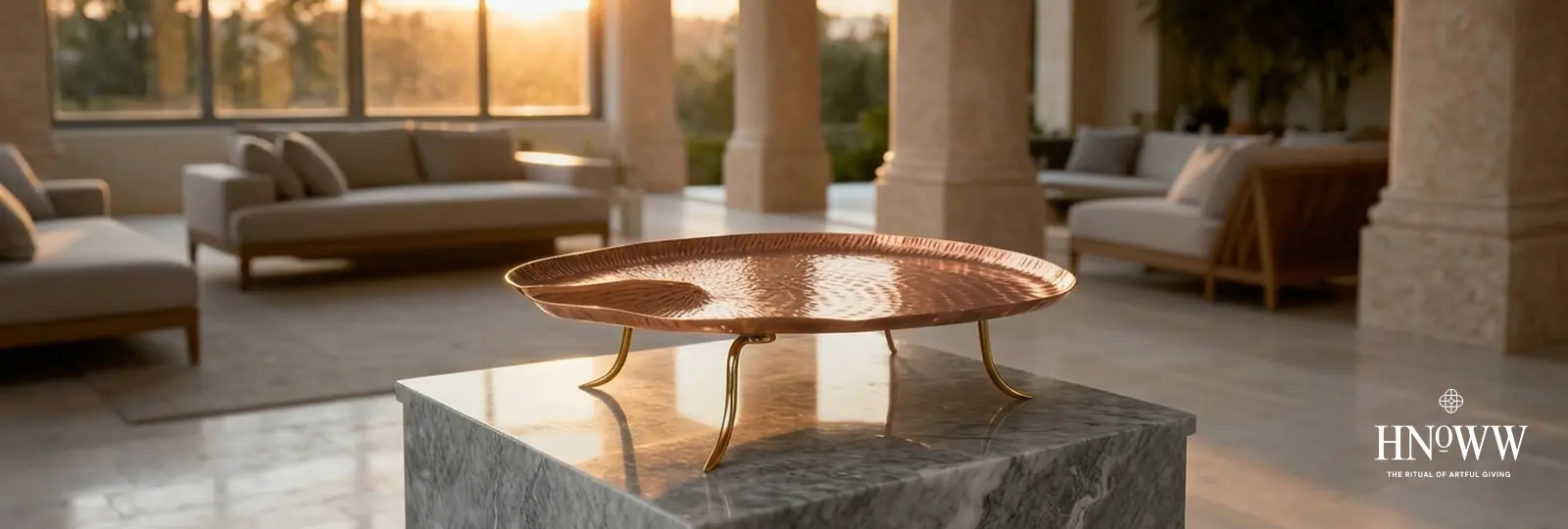
The Copper Surface was designed around elevation and material contrast.
Resting on sculpted tripod legs, the piece introduces architectural height while maintaining a remarkably restrained profile. Its hammered copper finish catches light unevenly, creating reflections that feel warm, textured, and constantly evolving.
There is a quiet sculptural quality to the object, even when left empty.
Placed on a dining table or console, it changes how the surface itself is perceived. The raised form creates shadow beneath it, introducing depth and layering into otherwise flat compositions.
What makes The Copper Surface particularly compelling within contemporary interiors is its duality. It functions beautifully as a serving object, yet its visual identity feels closer to a contemporary metal sculpture than traditional tableware.
The result is an object that feels both functional and architecturally refined enough for modern villas and understated enough for minimalist apartments.
Check out: The Copper Surface Sculptural Centerpiece
Contemporary interiors are often defined by precision.
Clean lines, symmetrical layouts, smooth materials, and controlled palettes create a sense of order that feels calm and sophisticated. Yet without contrast, these environments can occasionally feel too restrained.
Organic forms introduce balance.
Irregular silhouettes, textured surfaces, and nature-inspired shapes soften structured interiors in a way that feels instinctive rather than decorative.
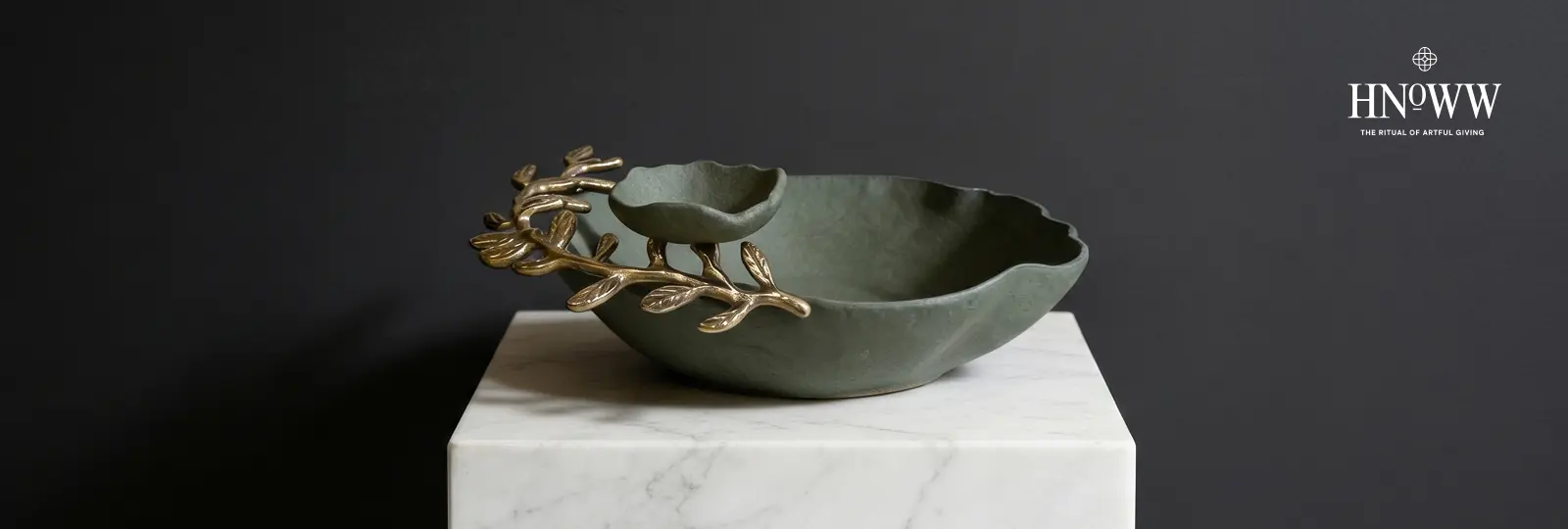
The Branch Bowl introduces a softer and more organic feel into modern interiors.
The stone-finished bowl of the design provides a solid architectural presence that meets the design requirements of its space, while the cast brass branch detail brings lightness and dynamic movement to the piece. The two materials create a subtle tension because one material represents stability while the other material appears to float.
Instead of overpowering the space, it quietly adds warmth and balance.
The Branch Bowl produces warm tonal effects through its design elements when it is set against marble wood, matte stone, or brushed metal surfaces. The design of this product particularly fits minimalist spaces because any change in material usage will attract attention.
It reflects the growing preference in Dubai homes for interiors that balance modern architecture with natural elements.
It feels collected rather than manufactured. Quiet rather than performative.
Check out: The Branch Bowl Sculptural Centerpiece
A beautifully styled surface rarely exists on a single visual plane.
Luxury interiors often rely on height variation to create rhythm within a room. Elevation changes how objects relate to one another, introducing movement and hierarchy without adding clutter.
Even the simplest compositions become more dynamic when one object rises slightly above the rest.
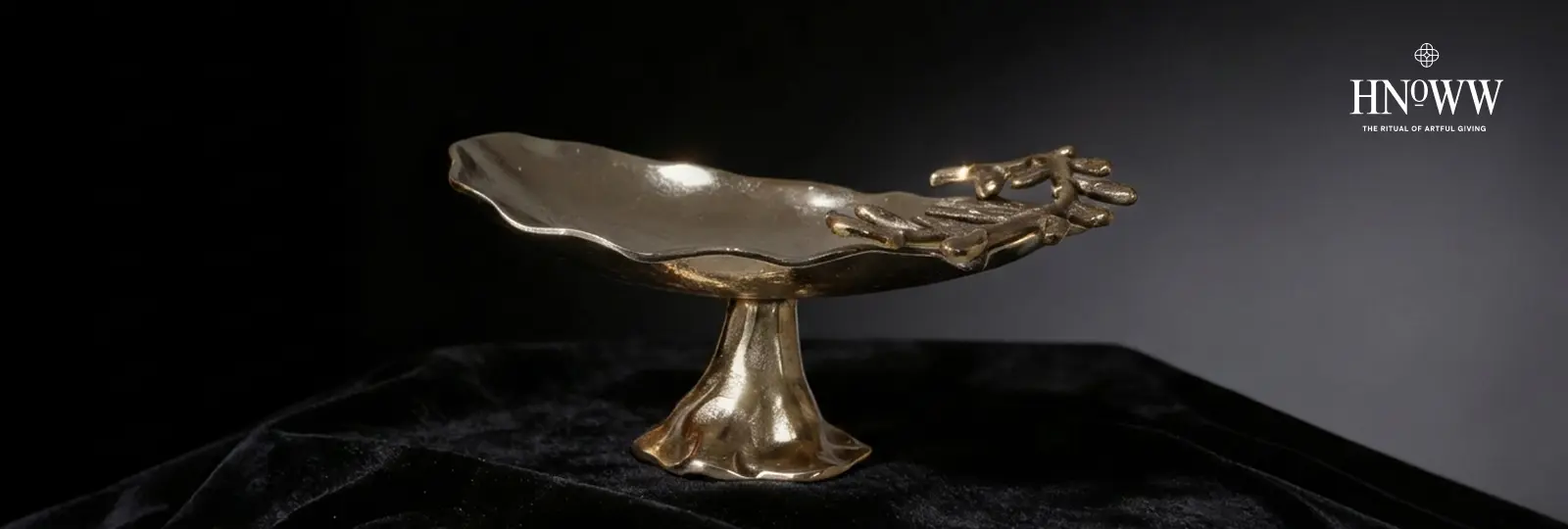
The Pedestal Platter explores this idea through elevation.
Its elevated form creates depth and dimension without needing excessive decoration.
The sculpted base gives the piece stability, while the reflective surface interacts beautifully with surrounding light. The form uses an irregular edge, which prevents excessive straightness to create an architectural design that appears more natural.
Even a slight elevation changes how a table feels. It creates importance without needing excess detail. The Pedestal Platter creates a hierarchical design which maintains contemporary interior space requirements by dining tables, coffee tables, and consoles.
It allows one carefully chosen object to feel complete on its own.
Check out: The Pedestal Platter Sculptural Centerpiece
Styling sculptural decor objects requires a different mindset from traditional decorating.
The goal is not to fill a surface. It is to create balance through spacing, proportion, and material contrast.
Dining tables often look best when styled with simplicity. One sculptural centerpiece often creates more impact than several decorative items together.
The object must be of the right proportions relative to the table; big enough to give weight to the room, but not too big to deprive it of room for conversation and movement.
Metallic or raised objects work well in the Dubai environment owing to their natural fusion with natural light and the vastness of space architecture.
Coffee tables permit additional decorative elements because the main sculptural element needs to stay at the center of the design.
The arrangement needs books and textured materials and smaller stone objects as supporting elements, which must maintain their secondary position to the centerpiece.
Organic forms work best in these environments because they reduce the impact of straight furniture designs while enhancing the peacefulness of formal indoor spaces.
The entryway usually sets the emotional tone of a house almost instantly.
Placing a piece of sculpture on a console makes an immediate impact on the room without requiring any other ornamentation. Asymmetrical positioning seems more modern and easygoing, and reflective surfaces lend dynamism to the room through varying lighting effects.
A well-styled entryway should have a composition that seems effortlessly done.
Sometimes just one piece can do the job.
The right centerpiece depends less on trends and more on how naturally it fits into the space.
Whereas a small flat could do well with an elegant metallic piece which will bring in warmth without taking over the interior, larger villas and open floor plans can handle more dramatic sculptural pieces.
Materiality counts just as much as scale.
Reflective metallic finishes can bring warmth and light into neutral interiors. Stones bring a grounded contrast to smooth architectural surfaces. Natural shapes bring balance into symmetrical rooms.
It must feel like part of the room around it.
Before selecting your centerpiece, think about:
Most importantly, the object should feel chosen rather than simply placed.
That distinction is often what separates a beautifully designed room from one that merely appears decorated.
The HNOWW project perceives home objects from an architectural point of view, thus making products that combine aspects of sculpture, function, and architecture.
The project embodies materiality, modesty, and skillful construction. The aim is to create objects that would fit well into modern interiors, while still having sufficient sculptural qualities to shape a space.
From the reflective warmth of The Copper Surface to the organic asymmetry of The Branch Bowl and the elevated composition of The Pedestal Platter, every piece contributes to a quieter and more refined way of living.
This is modern home decor in the UAE, approached with intention rather than excess.
Objects designed not for trend cycles, but for permanence.
The most impressive interiors are seldom the most cluttered.
They are those interiors where every piece has a reason for being there. Where material meets light without a fuss. Where surfaces have been arranged and not just occupied.
Sculptural centerpieces bring this feeling into a space naturally. They bring form without weight, difference without discord, personality without extravagance. Through shape, texture, height, and placement, they quietly shape the atmosphere of a room.
In modern home furnishings in Dubai, as they move ever further away from loudness and towards elegance, the significance of these items grows all the more pronounced. They are no longer just decorative objects placed at the centre of a table.
They become part of the architecture of the home itself.
At HNOWW, each piece is designed with that philosophy in mind, objects created to live within contemporary interiors naturally, beautifully, and with lasting relevance.
Because a centerpiece should never simply occupy a surface.
It should define it.
The majority of sculpture centerpieces are made to be both aesthetically pleasing and useful. A raised dish can be utilized for serving, a bowl can store everyday necessities, and an elevated surface can be incorporated into daily life while still maintaining an exquisite appearance.
These items are unique because they were made for purposes other than table décor. Their presence, form, and material give the entire space personality. They continue to add depth and balance to the interior even when they are not in use.
ARTFUL GIVING • GLOBAL INQUIRY